Magnetic Particle Testing (MT) Overview
磁粉检测(MT)概述
Magnetic Particle Testing (MT) is a non- destructive testing (NDT) method used to detect surface and near-surface discontinuities in ferromagnetic materials. It is widely used in industries such as aerospace, automotive , construction, and manufacturing for quality assurance and defect detection.
磁粉检测(MT)是一种无损检测(NDT)方法,用于检测铁磁材料的表面和近表面不连续性。它广泛应用于航空航天、汽车、建筑和制造等行业,用于质量保证和缺陷检测。
Principle of MT(MT原理)
MT works by magnetizing a ferromagnetic material and applying magnetic particles (dry or wet). If there is a discontinuity (e.g., crack, void) on or near the surface, it will cause a leakage in the magnetic field. The magnetic particles accumulate at the leakage area, making the defect visible under proper lighting conditions.
MT的工作原理是磁化铁磁材料并施加磁性粒子(干或湿)。如果表面上或附近存在不连续性(例如裂纹、空隙),则会导致磁场泄漏。磁性粒子在泄漏区域积聚,使缺陷在适当的照明条件下可见。
Advantages of MT(MT的优势)
• High sensitivity to surface and near-surface defects.
对表面和近表面缺陷高度敏感。
• Quick and cost-effective inspection process.
快速且经济高效的检查流程。
• Provides immediate visual indications of defects.
提供缺陷的即时视觉指示。
• Suitable for complex shapes and components.
适用于复杂的形状和部件。
Limitations of MT(MT的局限性)
• Limited to ferromagnetic materials (e.g., steel, iron, and nickel).
仅限于铁磁性材料(如钢、铁和镍)。
• Cannot detect subsurface defects deep within the material.
无法检测到材料深处的次表面缺陷。
• Requires surface cleaning for accurate results.
需要表面清洁才能获得准确的结果。
• Magnetization may need to be removed after inspection.
检查后可能需要去除磁化。
Applications of MT(MT的应用)
• Weld Inspection: Identifying surface cracks, lack of fusion, or other weld defects.
焊缝检查:识别表面裂纹、未熔合或其他焊接缺陷。
• Component Inspection: Examining shafts, gears, forgings, and castings for cracks or flaws.
部件检查:检查轴、齿轮、锻件和铸件是否有裂纹或缺陷。
• Pipeline Inspection: Detecting surface flaws in pipes and fittings.
管道检查:检测管道和配件的表面缺陷。
• Maintenance and Repairs: Ensuring structural integrity in critical components of machinery or vehicles.
维护和修理:确保机械或车辆关键部件的结构完整性。
MT Techniques(MT技术)
1. Continuous Method: Magnetic particles are applied during the magnetization process.
连续法:在磁化过程中施加磁性粒子。
2. Residual Method: Magnetic particles are applied after the material has been magnetized.
剩余法:在材料磁化后施加磁性粒子。
3. Wet Method: Uses liquid suspension containing magnetic particles for better visibility on smooth or polished surfaces.
湿法:使用含有磁性颗粒的液体悬浮液,在光滑或抛光的表面上获得更好的可见度。
4. Dry Method: Applies dry magnetic particles, suitable for rough surfaces and field inspections.
干法:应用干燥磁粉,适用于粗糙表面和现场检查。
Types of Magnetization(磁化类型)
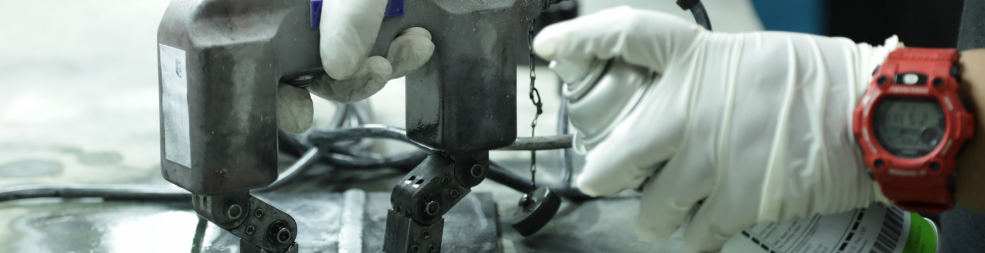
• Direct Magnetization: Current is passed directly through the component to generate a magnetic field.
直接磁化:电流直接通过组件产生磁场。
• Indirect Magnetization: An external magnetic field is applied using a yoke or coil.
间接磁化:使用磁轭或线圈施加外部磁场。
Standards and Certification(标准与认证)
MT is performed according to industry standards such as:
磁粉检测是根据行业标准进行的,例如:
• ASTM E709: Standard guide for magnetic particle testing.
ASTM E709:磁粉检测标准指南。
• ISO 9934: Magnetic particle testing standards.
ISO 9934:磁粉检测标准。
• ASME Section V: NDT methods for boilers and pressure vessels.
ISO 9934:磁粉检测标准。
Key Points to Consider(需要考虑的关键点)
•Proper magnetization and demagnetization techniques are critical to ensure reliable results.
正确的磁化和退磁技术对于确保可靠的结果至关重要。
•Fluorescent particles combined with UV light can enhance defect visibility.
荧光颗粒与紫外光结合可以提高缺陷的可见度。
•MT is highly effective for detecting fatigue cracks, grinding cracks, and quenching cracks in ferromagnetic components.
磁粉检测对于检测铁磁部件中的疲劳裂纹、磨削裂纹和淬火裂纹非常有效。
Magnetic Particle Testing is a reliable and widely used method for ensuring the safety and quality of ferromagnetic materials.
磁粉检测是一种可靠且广泛使用的方法,用于确保铁磁材料的安全性和质量。
 Countries
 Customers
 Schemes
 Team Members

IWCC is an ISO/IEC 17024 accredited certification body which provides auditor certification service to ISO standards.

